Group challenges constitutionality of $8.4B proposition
Regional News

Audio By Carbonatix
4:40 PM on Monday, October 19
Madeline Shannon
(The Center Square) – A group opposing Proposition 38, a ballot measure in California's Nov. 3 election, is challenging the constitutionality of the $8.4 billion measure.
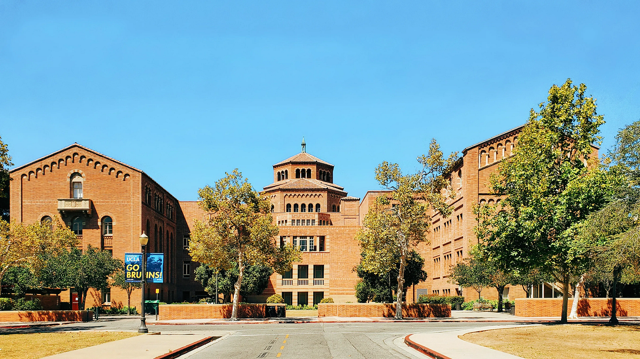
The proposition would use all of that funding to pay for immunology research, all backed by general obligation bond funds paid for by California’s taxpayers. Roughly half of that $8.4 billion could go to one institution – the California Institute of Immunology and Immunotherapy at University of California, Los Angeles, opponents of the measure told The Center Square. Those opponents are questioning how legal that is.
Part of the problem is the criteria are so specific only one or two institutions can qualify for the money, opponents of Prop. 38 told The Center Square.
“They created these criteria to be eligible to compete, and that eligibility is predicated almost entirely on UCLA’s numbers,” Robert Kaplan, co-chair of the No on Prop. 38 campaign, told The Center Square. “So you’d have to have more than 3.5 million outpatient visits per year, and UCLA has a little bit more than that. UCSF [University of California, San Francisco] is 3.4 [million].”
According to the proposition, the bond money could only go to an institution affiliated with the University of California, the state’s 10-campus public university system. Qualifying recipients would also have to have at least 35,000 inpatient visits at on-campus hospitals and have an immunology and immunotherapy graduate program, among other criteria.
The group sent a letter to California Attorney General Rob Bonta, asking him to look into the constitutionality of the ballot measure.
“Californians are being asked to assume $8.4 billion in general obligation bond debt, with half the proceeds reserved for what appears to be a single, predetermined private institution,” that letter read. “Voters deserve to know whether this arrangement complies with the constitutional safeguards governing initiatives and the use of public funds.”
The Center Square did not hear back from the Attorney General’s Office before publication time on Monday.
Advocates of Prop. 38 told The Center Square that the taxpayer-backed bond money for immunology and immunotherapy research is necessary now in the aftermath of federal budget cuts to science and medical research.
“Scientists are losing their jobs, and life-saving medical research has been stopped,” Robin Swanson, spokesperson for the Yes on Prop. 38 campaign, told The Center Square. “So there is a brain drain that has happened in the field of science and research and a race against time. Patients can’t afford to wait, and Prop. 38 will create that stable source of funding for scientists and medical experts so they can do this kind of research.”
Groups supporting Prop. 38, including the Yes on 38 Campaign, the Michael J. Fox Foundation, Alzheimer’s Los Angeles and the American Nurses Association, did not respond to The Center Square's request for comment on Monday.
The opposition's Kaplan said putting this much taxpayer-backed bond money into immunology research limits the ability to fund research in other areas of health science and medicine.
“In terms of the breadth of science, this is very, very narrow and probably reduces the probability that California will independently fund all these other areas of investigation,” Kaplan said. “If you look at funding for immunological research and immunotherapy, funding from the National Institutes of Health is quite robust in this area.”
Expenditures at the federal level in immunological research went up 57% since 2019, Kaplan said.
“Immunotherapy is one of the areas where there has been significant growth,” Kaplan added. “There is a substantial amount of research going into these areas, and it’s not entirely clear that California needs to make this level of expenditure just to keep the research going.”
David Panush, co-chair of the No on Prop. 38 campaign, said he’s not sure how much taxpayers could afford to pay for the Prop. 38 bonds and the bond resulting from Senate Bill 895, which places a similar bond on the March 2028 ballot. That ballot measure would authorize $7.5 billion in taxpayer-backed bonds to pay for health and science research, according to previous reporting by The Center Square.
“Voters will have a choice,” Panush told The Center Square. “But it would be very costly if the voters were to pass both of them. I just don’t think they can afford both, so they need to choose.”
Officials with the University of California declined to comment for this story. Administrators at UCLA and the California Institute of Immunology and Immunotherapy did not respond to The Center Square's request for comment.